




When you’re facing a federal issue, you need an attorney whose going to be available 24/7 to help you get the results and outcome you need. The value of working with the Spodek Law Group is that we treat each and every client like a member of our family.
There’s one reason you’re on this website: you’re looking for an elite criminal defense law firm. We’re focused on providing the highest level of customer service, and case results for our clients. Our New York criminal defense lawyers are focused on servicing a very curated clientele, that expects high class service and exceptional understanding of the law. We have experience handling the toughest legal situations – that require experience, and excellence, in order to get the best possible legal outcomes for our clients. We have over 50 years of combined experience handing legal situations – nationwide, and even internationally. When you’re looking for a criminal defense lawyer, Spodek Law Group is a firm that will be on your radar. Our reputation is well received by other attorneys and members of the media alike.







The Spodek Law Group is an acclaimed law firm specializing in criminal defense, renowned for its provision of a fully digital portal. Through this portal, clients have the convenience of tracking the progress of their case, communicating with us, submitting documents, and accessing additional services. The Spodek Law Group is a law firm with a nationwide presence, serving clients from coast to coast. We possess extensive experience in handling cases across the country, and our dedicated attorneys are committed to providing you with top-notch representation no matter what your legal situation may be.
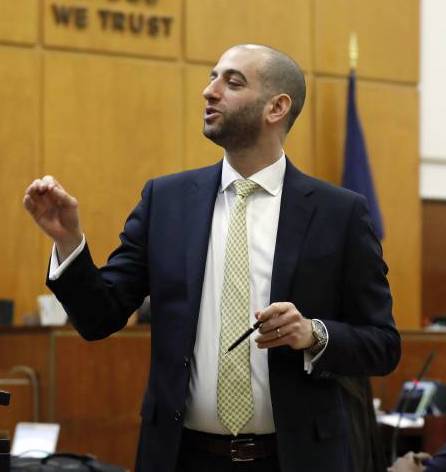
Todd Spodek, our founding partner, is a seasoned trial attorney with many years of experience. He is a second generation lawyer, and one who takes his work seriously. He has many years of experience handling hundreds of trials. He has been seen on major news outlets, ranging from New York Post, Newsweek, Fox 5 New York, South China Morning Post, Insider.com, to other major news outlets. He has appeared as a legal expert on dozens of television and radio shows.
In 2022, Netflix released a series about one of Todd’s clients: Anna Delvey/Anna Sorokin.
It’s simple. Every single client deserves honesty and white glove service. Every single client should know what he, or she, potentially faces and what the outcome of their criminal defense case could be – before hiring a criminal defense attorney. Our lawyers have experience handling criminal defense cases nationwide, ranging from Los Angeles to NYC. Our philosophy is fair and simple – every single law firm should adhere to it – but most don’t. Most criminal defense attorneys will take on any client possible who can pay — regardless of whether they can help the client. Not us. We only take on clients who can help. We are selective about the number of clients we work with, and only work with clients who we can truly help. This is different from other law firms, who take on every single client – irrespective of the outcome.
When you reach out to our law firm – the process begins with a risk free consultation in person, or over the phone. During this consultation – you can ask us anything – regardless of how long it takes. We encourage you to take this opportunity to ask the tough questions – which allow us to show you our understanding of the issue you’re facing. We are available to help you 24/7.
The Spodek Law Group handles cases nationwide. We have offices in NYC and Los Angeles. Regardless of how tough your situation is – we are here to help you. Our criminal defense lawyers work hard to have a solution for you, irrespective of the situation you find yourself in. Many clients are often embarrassed by their situation, and don’t speak openly about their alleged issue. We encourage open dialogue, and recommend full transparency – so we can give you the best possible legal advice. Our NYC criminal attorneys understand that your future is on the line – and that’s why we’re here to help you and give you the best possible advice.
If you’re a suspect, or person of interest, in a federal crime, we nca help
If you’re under investigation, or have already been charged with a crime, then your future and freedom could be at risk.
Authorities such as the FBI, DEA, Secret Service, and Homeland Security, could be involved in the investigation against you. The agencies have extremely vast resources, compared to local law enforcement.
The federal government has the ability to intercept phone calls, involve in spying and collecting video evidence, and use other tools.
Punishments for federal offenses and crimes can be harsh. There are mandatory minimum sentences which absolutely cannot be negotiated, and there is no probation.
Federal level offenses are very complex, and serious. It takes months or years to prepare a case. Federal agents are extremely thorough, and aggressive, when building evidence for your case. If there’s suspicion you’re involved in a federal offense, it’s likely agents have been gathering evidence about it for a long time already and have built a case against you. If the case against you results in charges, it means the US Attorney’s office has already found incriminating evidence against you. It’s crucial you don’t want to seek legal representation when preparing your defense. Only an experienced federal criminal defense lawyer can build an aggressive enough defense.
How do federal criminal charges differ from state offenses?
There are differences in the ways that investigations of federal crimes is handled. The US Attorney’s Office, and DOJ, are responsible for prosecuting and litigating federal cases. They follow federal rules of criminal procedures. Federal judges have to follow sentencing guidelines, and mandatory minimum sentences. They don’t get to use any of their discretion. The right federal lawyer will work with you, every step of the way, and keep you informed.
What to expect during a federal arrest and the court
Criminal cases handled by federal courts follow a different process than those handled by state courts. If the investigation by federal authorities results in enough evidence to make an arrest, the individual who is charged will be brought into custody, and then interviewed. The accused then appears in court for an arraignment in front of a federal judge. The judge then decides whether or not to grant the defendant bail, and is responsible for setting conditions of the release. The result of the arraignment depends on the details of the crime and case. The judge will look at information gathered during the pretrial interview, the nature of the crime, the defendant’s criminal history, and other relevant information.
The BEST LAWYER ANYONE COULD ASK FOR!!! Todd changed our lives! He’s not JUST a lawyer representing us for a case. Todd and his office have become Family. When we entered his office in August of 2022, we entered with such anxiety, uncertainty, and so much stress. Honestly we were very lost. My husband and I felt alone. How could a lawyer who didn’t know us, know our family, know our background represents us, When this could change our lives for the next 5-7years that my husband was facing in Federal jail. By the time our free consultation was over with Todd, we left his office at ease. All our questions were answered and we had a sense of relief.
Getting a visit from federal agents can be an intimidating and unnerving experience. Even if you haven’t done anything wrong, having the FBI or other federal law enforcement show up at your home or business can make you feel like you’re in trouble. However, there are things you can do to protect your rights and handle the situation properly.
The first thing to do is remain calm. Take a few deep breaths. Don’t get angry or upset with the agents. Yelling or becoming aggressive will only escalate the situation. Be polite and professional.
When federal agents arrive, you should ask them to identify themselves. Ask to see their credentials, including their name, agency, and badge number. Take notes so you have a record of this information. You have a right to know who is at your door and why they want to talk to you.
If the agents want to enter or search your home or business, ask to see a search warrant. The warrant should be signed by a judge and specify what the agents are authorized to search for and where they can search.Take your time to read over the warrant carefully. Make sure it is valid – check the date and address. If anything seems off, point it out to the agents.If they don’t have a warrant, you do not have to let them inside or consent to a search. Simply say “I do not consent to any searches.”Search warrant
If it is legal in your state, start recording audio or video when federal agents arrive. This creates an objective record of what was said and done. Let them know you are recording.
Tell the agents you want to speak to an attorney before answering any questions or consenting to a search. Call a criminal defense lawyer right away. Avoid talking about anything substantive until your lawyer arrives.Having an attorney present protects your legal rights. Your lawyer can examine any warrants, negotiate with agents, and stop questioning if needed.
Politely decline to answer the agents’ questions until your attorney arrives. You have a Fifth Amendment right not to incriminate yourself. Anything you say can potentially be used against you later.Simply tell agents you wish to remain silent until you have legal counsel present. Don’t argue, resist, or engage in small talk – that could be seen as consenting.
Don’t make any sudden movements or attempt to hide anything when federal agents arrive. That could be seen as suspicious behavior or destruction of evidence.Let your lawyer handle asserting your rights. Just remain calm and courteous.
If agents leave to get a warrant after being denied entry, lock your doors and secure your home or business. This prevents them from entering while you are waiting for your attorney to arrive.
If agents present a valid search warrant signed by a judge, you have to let them enter and search the specified areas. Interfering with their search or destroying evidence could lead to criminal charges.However, continue to assert your rights. Remain silent, record what happens, and don’t sign any documents without your lawyer present.
Request copies of the warrant, inventory of any items seized, and any other documents from the search. This creates a record you can review with your attorney later.
Write down as much as you can recall about what the agents said and did during their visit. Note their names, agencies, the time they arrived, what they looked at or took, and any questions they asked.
After the agents leave, immediately contact a criminal defense attorney to discuss the incident. Your lawyer can advise you on next steps, including filing motions if your rights were violated.
Avoid posting about the visit on social media or talking to the press. Anything you say publicly could be used against you. Wait to discuss the incident until you have guidance from your attorney.Dealing with a visit from federal agents can be unsettling, but knowing your rights is empowering. Remaining calm, seeking legal counsel, and not consenting to questioning or searches helps ensure the interaction goes smoothly while protecting your legal interests. With the proper response, you can get through the experience intact.
After you’re arrested, it’s recommended you not speak to any police officer before hiring your own NYC criminal lawyer. You have the right to remain silent, as well as hiring your own private attorney. In order to get the best outcome for your case, you should invoke your rights ASAP.
Getting charged with a federal crime is scary enough, but then you gotta wonder – if I’m convicted, could the government seize my assets too? It’s a fair question. The short answer is yes, they totally can under certain circumstances. Let’s break it down.
One way the feds can snatch your property is something called civil asset forfeiture. This is when the government takes your stuff by filing a case against the assets themselves, not you. Crazy right? It’s like your car or house committed the crime.The usual targets are cash, cars, and houses that law enforcement believes are connected to criminal activity. They don’t even need to convict you of a crime first. The case is against the property, so it’s on you to prove the assets are totally legit. Good luck with that.This process has come under fire lately for being a little too aggressive. I mean the government can just take your stuff without convicting you first? Kinda shady. Many would argue it violates the whole “innocent until proven guilty” thing. But for now, it’s still legal on the federal level.
Ok this one makes more sense. If you’re convicted of a federal crime like drug trafficking, fraud, or organized crime, the court can order criminal forfeiture as part of your sentence.Here the government is seizing assets because they were used to commit a crime or were gained illegally. The assets are basically considered “guilty” too.The court has a ton of power here. They can forfeit almost anything – cash, cars, businesses, houses, land, securities, even intellectual property like patents and trademarks. Yikes!However, there are some limits. The government can only take property linked to the specific crime you were convicted of. If you’re convicted of tax fraud, they can’t take your house just because they feel like it. There has to be a connection.
Sometimes instead of forfeiting your assets, the court will order fines and restitution as part of your sentence. This means you have to pay money to the government and victims.If you don’t pay up, the government can seize assets like cash, cars, or property to cover the amounts owed. They can even garnish your wages or put liens on your bank accounts and other assets.So in this case it’s not exactly asset forfeiture, but the end result is still the government taking your stuff if you don’t pay. Not ideal.
A lot of people think you can get out of criminal fines, restitution, and forfeitures through bankruptcy. Nope! These debts typically can‘t be discharged through bankruptcy.The government will get paid one way or another. Your assets are fair game if you don’t pay what you owe.
If you’re facing criminal charges, the best way to avoid asset seizure may be negotiating a plea deal. Many federal prosecutors will agree to not pursue forfeitures and limit fines/restitution in exchange for a guilty plea.You’ll probably still lose some assets and have to pay fines, but maybe you can hang on to your house, retirement savings, college fund for the kids, etc. It’s something to discuss with your defense attorney.
If the government seizes your assets in a way you feel is unfair or illegal, you can challenge them in court. For civil forfeiture, you’d file a claim on the property and fight it out in court. For criminal cases, you can appeal the forfeiture order.It’s always an uphill battle though. The government has way more resources than the average person. You’ll need a knowledgeable attorney on your side. But sometimes you can win, especially if the seizure was questionable.
At the end of the day, it is possible to lose all your assets if convicted of a federal crime. Homes, cars, businesses, retirement accounts – nothing is really off limits if the court orders it.For most average folks, having everything seized would be financially devastating. It can mean starting over from scratch. Heck, you might not even be able to afford a good lawyer to fight the charges anymore!
The possibility of losing assets through forfeiture, fines, and restitution is very real if convicted of a federal crime. The key is avoiding criminal charges altogether, or negotiating a plea deal that limits fines and forfeitures.An experienced federal defense lawyer can help navigate these issues and fight back if the government seizes assets inappropriately. Don’t wait until it’s too late – get advice early on asset protection strategies.Overall the feds have broad powers to take private property linked to criminal convictions. While there are some limits, it’s a scary amount of power. So maybe don’t commit federal crimes, okay? And if you do, lawyering up ASAP is probably wise.